

Our Publications
Our publications aim to inform policy, guide practice, and spark dialogue across the EdTech ecosystem.
The European EdTech Alliance regularly publishes reports, insights, and analysis on the evolving landscape of digital education in Europe.
From deep-dive research to strategic recommendations, each piece is designed to support evidence-based decision-making and cross-sector collaboration.

Needs-Based EdTech Evidence Mapping Report
The world of EdTech evaluation and evidence is complex and the Needs-Based Evidence Mapping report provides a practical framework for clarifying what evidence is needed, by whom, and for which decisions across the EdTech ecosystem.
Built around a five-domain model, the report organises evidence according to purpose rather than methodological hierarchy. Instead of asking whether a product “has evidence”, the framework asks: which decisions does this evidence meaningfully inform — and which does it not?
The report argues for a shift from a narrow focus on “proof of impact” toward a broader culture of “proof of trust”: evidence that is credible, context-sensitive, explainable and socially responsible. Impact evidence remains important, but on its own it cannot address questions of pedagogical fit, usability, equity, safety, implementation feasibility or long-term sustainability.

AI Regulation EU Commission
The European EdTech Alliance supports the EU Commission with their AI Regulation. Building trust through the first-ever legal framework on AI we contributed with sharing our know-how and market insights.
Key policy objectives are:
• Set enabling conditions for AI's development and uptake
• Build strategic leadership in high-impact sectors
• Make the EU the right place for AI to thrive
• Ensure AI technologies work for people
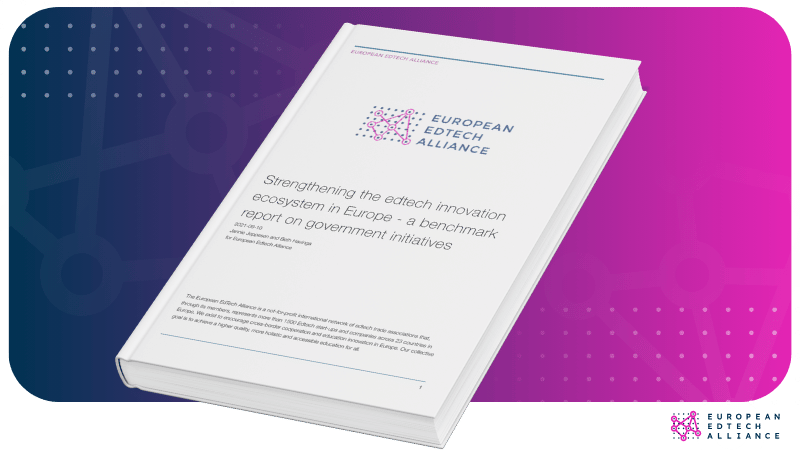
Strengthening the EdTech Innovation Ecosystem in Europe
The future of European education innovation depends on the quality and insightfulness of the implementation of technology in education as well as the quality and development of European educational technology, edtech. In the aftermath of the effects of the pandemic, this has never been more evident.
Given the fact that education by and large is a product of the public sector, we know that the untapped opportunity of harnessing the full potential of technology is further behind development in other industries and sectors.
In this report, we have mapped initiatives from governments around Europe to see how they support the innovation learning ecosystems needed. Results show a clear trend of governments seeing the need to support an innovation ecosystem for edtech and education in their countries. This is good news for the future of European education!